



More information
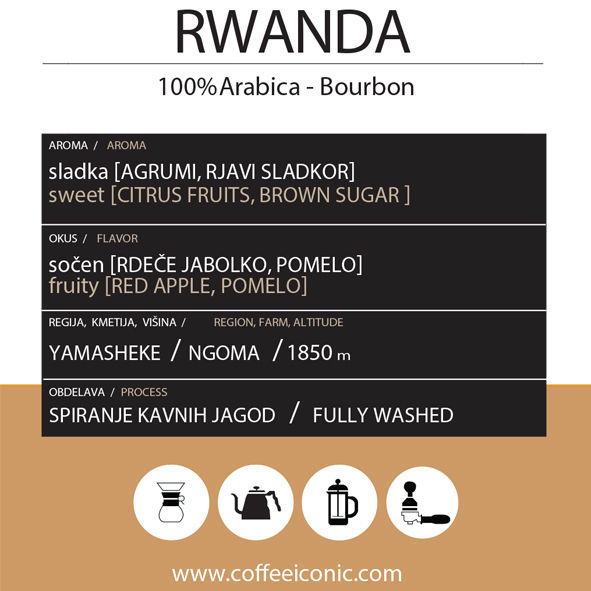
Nyamasheke District in Rwanda is blessed with terroir. The cool, humid climate of Lake Kivu and the Nyungwe Forest National Park preserves an abundance of groundwater in this uniquely mountainous region. Kivu is part of the East African Rift Valley, whose constant movement creates volcanic seepage from the lakebed, enriching the surrounding soils. Coffees from this region are often mealier and heavier than those from the rest of the country. Ngoma Coffee Washing Station is located in the southern part of Nyamasheke District, in a fantastic location right on the shores of Lake Kivu. The station is owned and operated by Baho Coffee Company, a small, community-focused processing and export group that currently operates six washing stations in 6 different districts in Rwanda and is currently building two more. In addition to thoroughly washed coffees like this one, Baho produces excellent quality naturally processed coffees and experiments annually with honey processing and anaerobic fermentation methods. Participating farmers who deliver coffee cherries to the Baho washing stations can count on annual premiums for payment and farm-level support, including annual coffee seedlings, health insurance, fertilizer, and harvest loans. Despite its small size compared to other East African coffee-producing countries, Rwandan coffee has a significant history and terroir that is unique to the rest of the continent. The Belgians initially forced coffee on remote communities as a cash crop to finance the colonies. They distributed varieties that the French had grown on Bourbon Island (now Reunion Island, near Madagascar), but they invested so little in the coffee’s success that production declined due to a lack of investment in national infrastructure, as well as in the farmers who grew it. As a result, the coffee sector in the world suffered a near-total disappearance from Rwanda’s independence in 1962 until the reconstruction after a devastating civil war and, surprisingly, a genocide in 1994. The former Rwandan cash crop, however, caught the attention of international buyers in the late 2000s thanks to one of East Africa’s most successful coffee interventions, the Partnership for Improving Agriculture in Rwanda with Links (PEARL). PEARL was a massive investment in infrastructure and education aimed at large regions of Rwanda where coffee was largely poorly processed and exported without traceability. The program, designed and led by the University of Michigan, Texas A&M, and a number of Rwandan organizations, greatly improved the quality of processing by building washing stations. It also organized remote and underfunded smallholder farmers into cooperatives capable of specialized partnerships. Perhaps most importantly in the long run, it took abandoned bourbon genetics, buried in neglect, and re-honored them, to the amazement of coffee drinkers around the world. The refreshing acidity, stone fruit flavors, and fragrant herbaceousness found in Rwandan coffee are still unique to bourbon produced anywhere else in the world. Producer groups like Baho are appreciating the potential of their farmers and learning how to maximize the quality and diversity available in Rwanda’s most promising terroirs.
top of page

Buy your favorite coffee
bottom of page